
Beautiful rugs, delivered fast + free

Rug Size Guides
Placing a rug under a bed seems simple until you are standing in the bedroom with a tape measure, wondering how far the rug should extend, whether the nightstands belong on it, and why the room feels slightly off. Rug placement under a bed matters more than most people expect. It affects comfort when you wake up, how balanced the room feels, and whether the bed looks grounded or like it is floating in space.
This guide is designed to be the most complete, practical resource on placing a rug under a bed. It walks through bed sizes, layout options, spacing rules, measuring tips, and styling advice so you can choose a setup that works for your room, not just what looks good in a catalog photo.
If you want the short answer before diving into details, start here.
The rest of this guide explains why these rules work and how to apply them to your specific bed size and room.
The size of your bed is the starting point for choosing the right rug. Each bed size has slightly different proportions, and the rug should support those proportions rather than fight them.
Twin beds are often used in kids’ rooms, guest rooms, and smaller spaces. Because the bed is narrow, rug placement can go wrong quickly if the rug is too small.
Best rug sizes for twin beds
Placement tips
Twin beds benefit from rugs that add warmth without overwhelming the room. Avoid tiny rugs that sit only under the middle of the bed, as they tend to look accidental rather than intentional.
Full beds need more visual weight than twin beds, especially in adult bedrooms.
Best rug sizes for full beds
Placement tips
A full bed paired with an undersized rug often makes the bed look larger than the room. A slightly larger rug helps everything feel more proportional.
Queen beds are the most common, and they benefit the most from proper rug sizing.
Best rug sizes for queen beds
Placement tips
With queen beds, the rug should feel like a foundation, not an accent. When in doubt, size up.
King beds require generous rugs to avoid looking cramped.
Best rug sizes for king beds
Placement tips
Small rugs under king beds are one of the most common bedroom design mistakes. A large bed needs a large rug to look intentional.
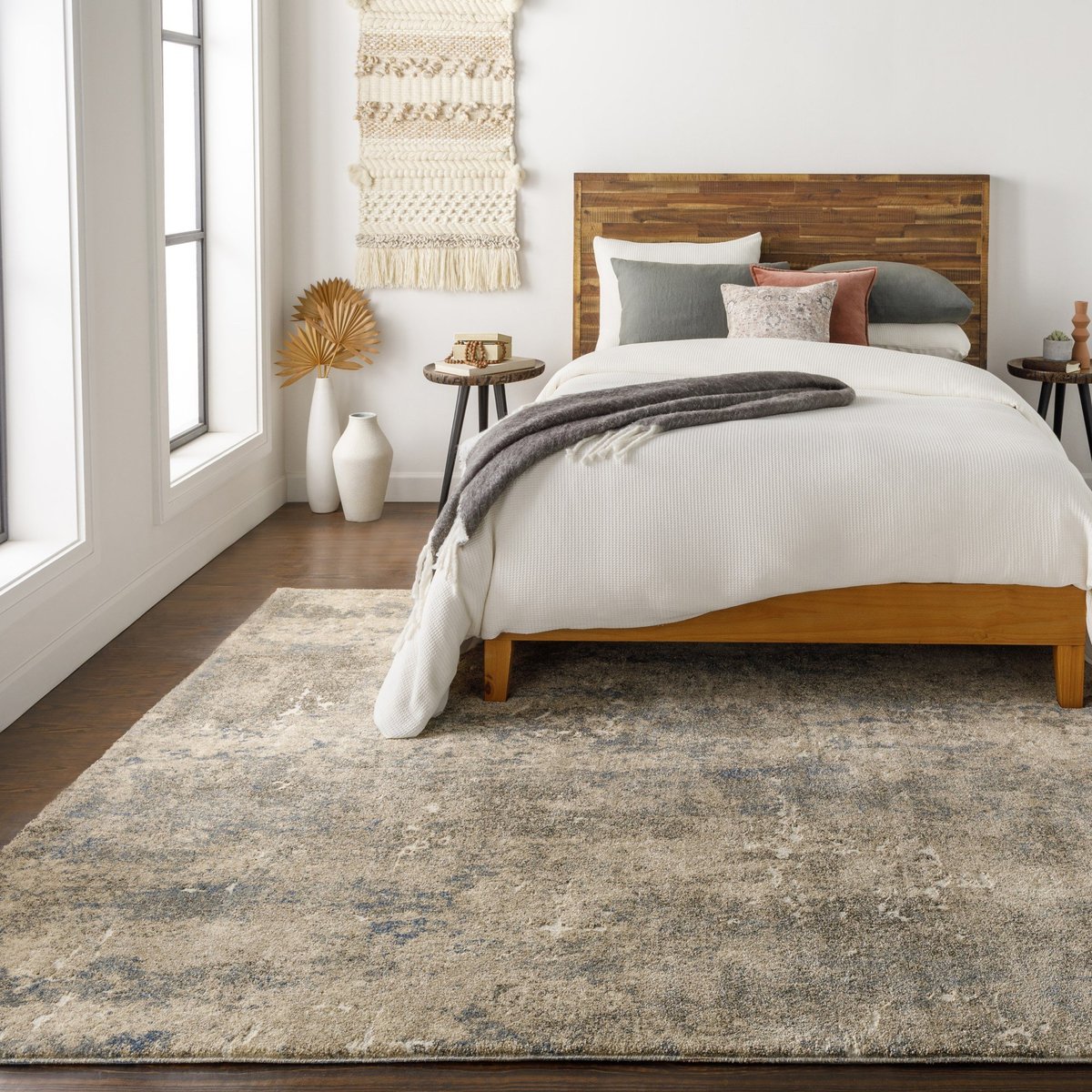
Beyond bed size, layout choice affects how the room feels and functions.
This layout places the bed and nightstands entirely on the rug.
Why it works
Things to watch
In this setup, the bed sits on the rug while nightstands remain off.
Why it works
Things to watch
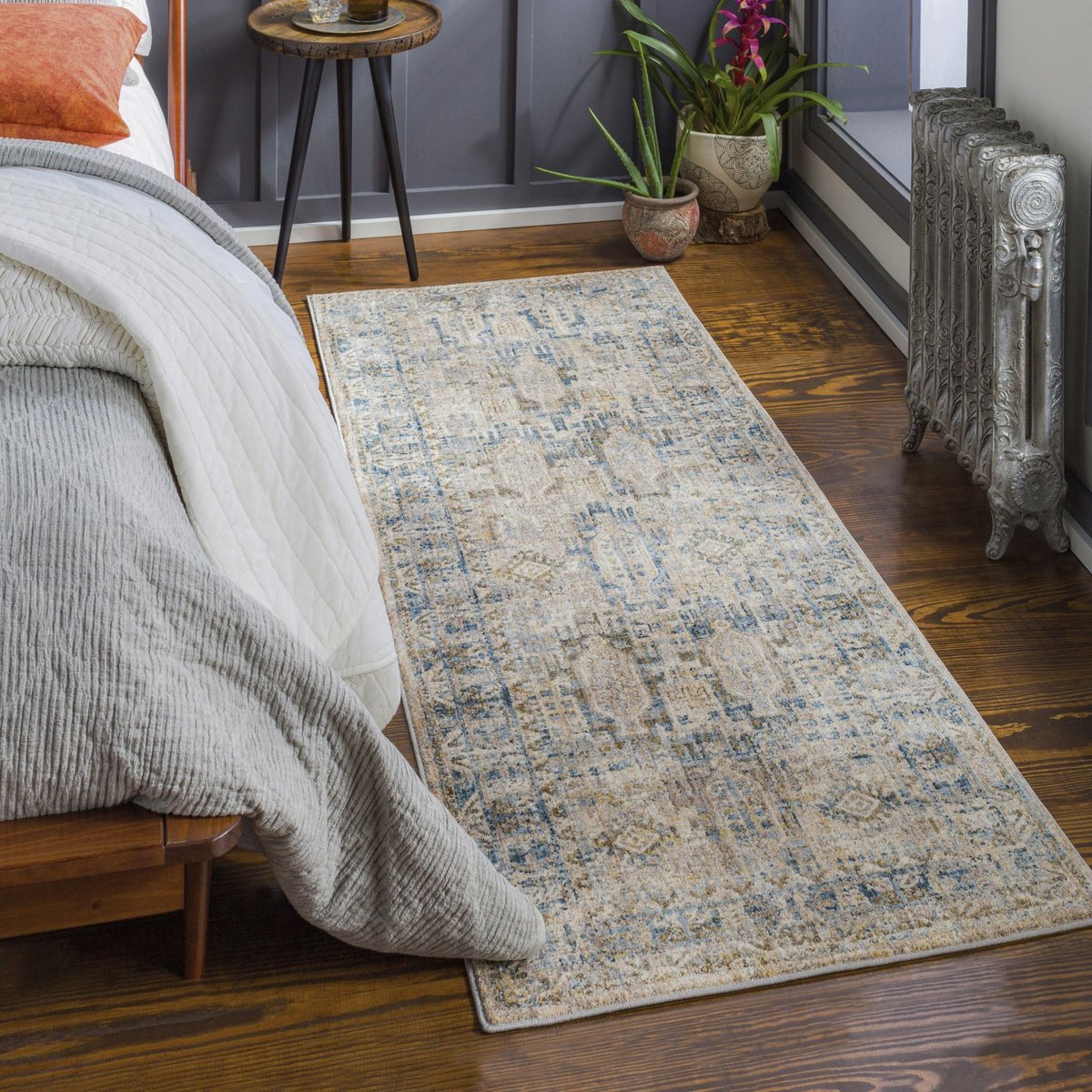
This option uses a smaller rug or accent rug at the foot of the bed.
Why it works
Things to watch
Side runners are placed along one or both sides of the bed.
Why it works
Things to watch
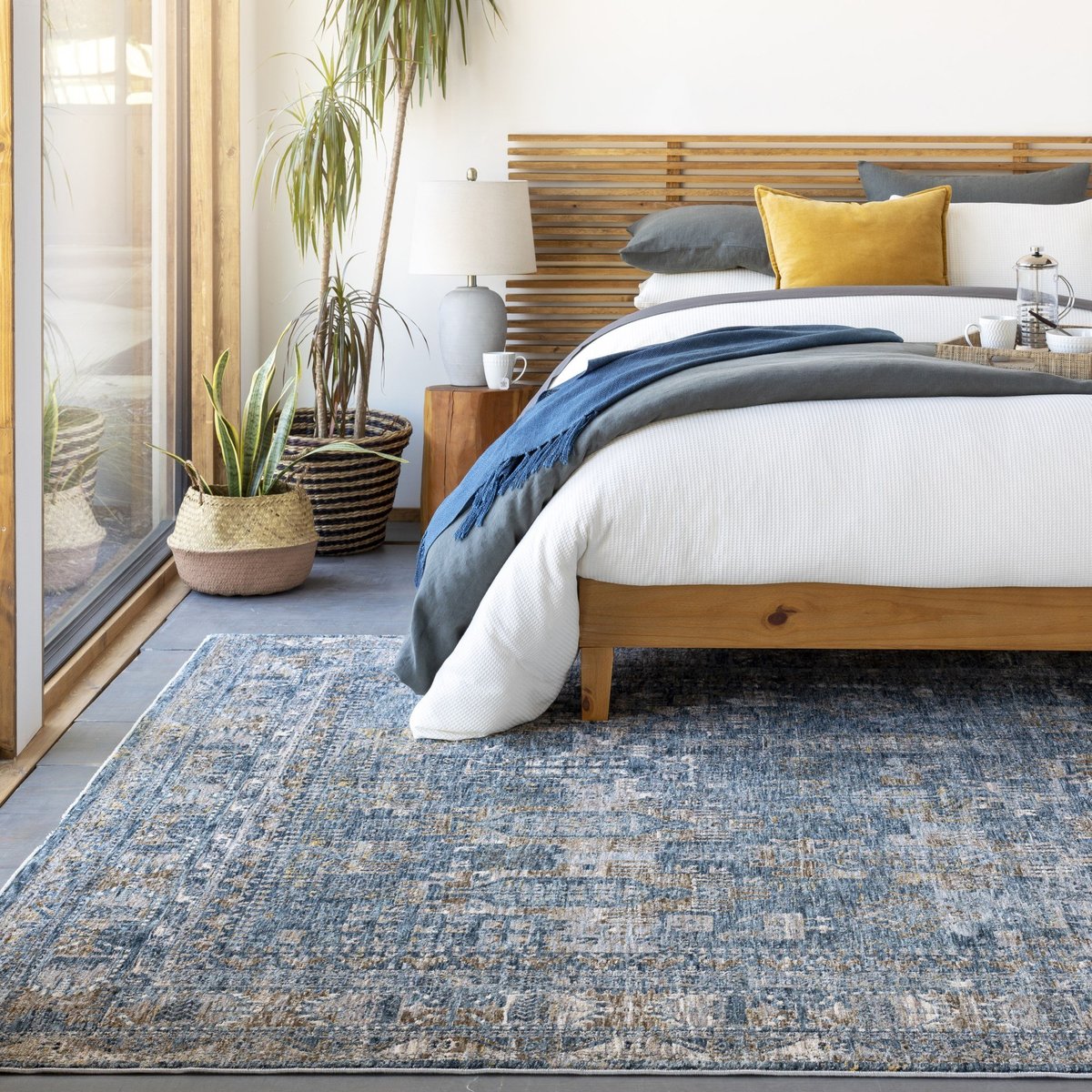
Room size matters just as much as bed size.
General spacing rules
In small rooms, tighter spacing is acceptable. In larger rooms, more breathing room around the rug helps everything feel intentional.
Measuring correctly prevents costly mistakes.
This simple visualization step often reveals whether a rug will feel too small or just right.
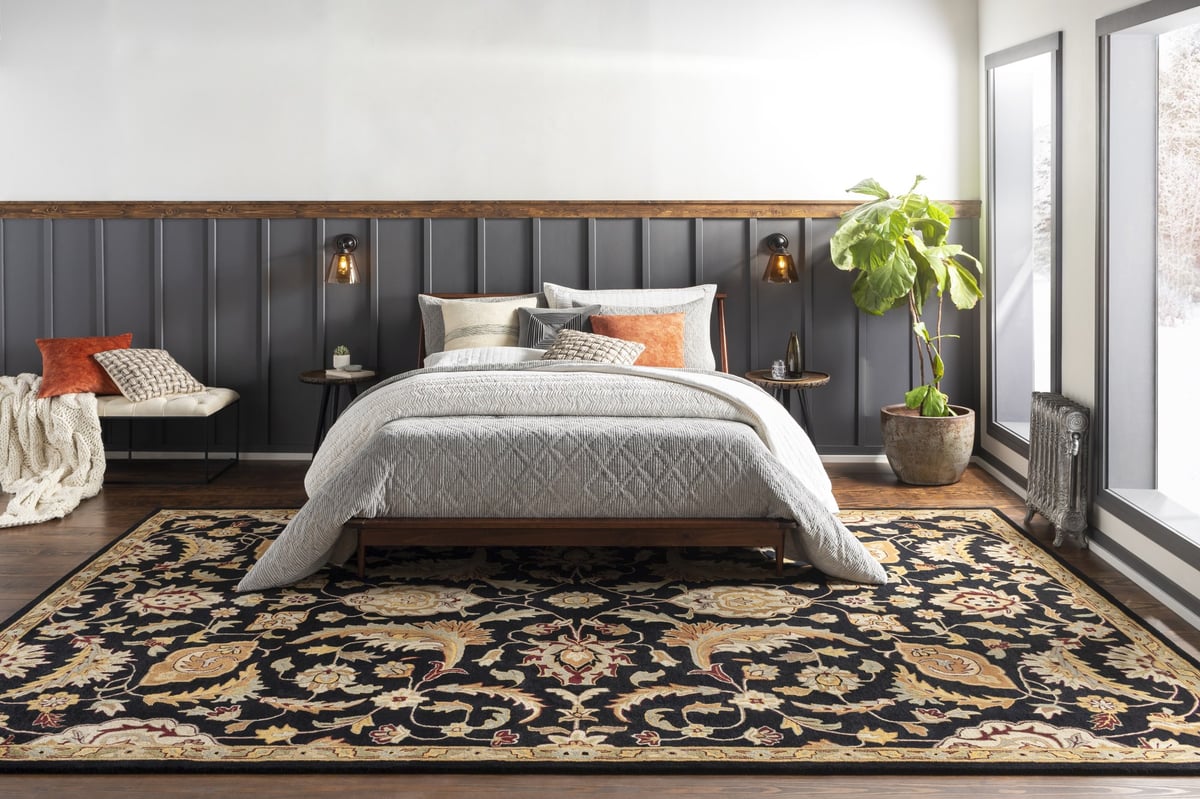
Choosing a rug that is too small: This is the most common issue. When in doubt, choose the larger size.
Placing the rug too far under the bed: If most of the rug is hidden, it will not visually anchor the room.
Ignoring nightstand placement: Nightstands that sit awkwardly half on and half off the rug disrupt balance.
Skipping a rug pad: Rug pads improve comfort, safety, and longevity.
A rug does not exist in isolation. It should work with the rest of the room.
Bedding: Choose rug colors that complement, not compete with, your bedding.
Wall color: Neutral rugs soften bold walls. Patterned rugs add interest to simple palettes.
Furniture finishes: Wood tones often pair well with warm rugs, while metal or lacquer finishes work with cleaner patterns.
Layering: In carpeted rooms, layering a rug adds depth and defines the bed zone.
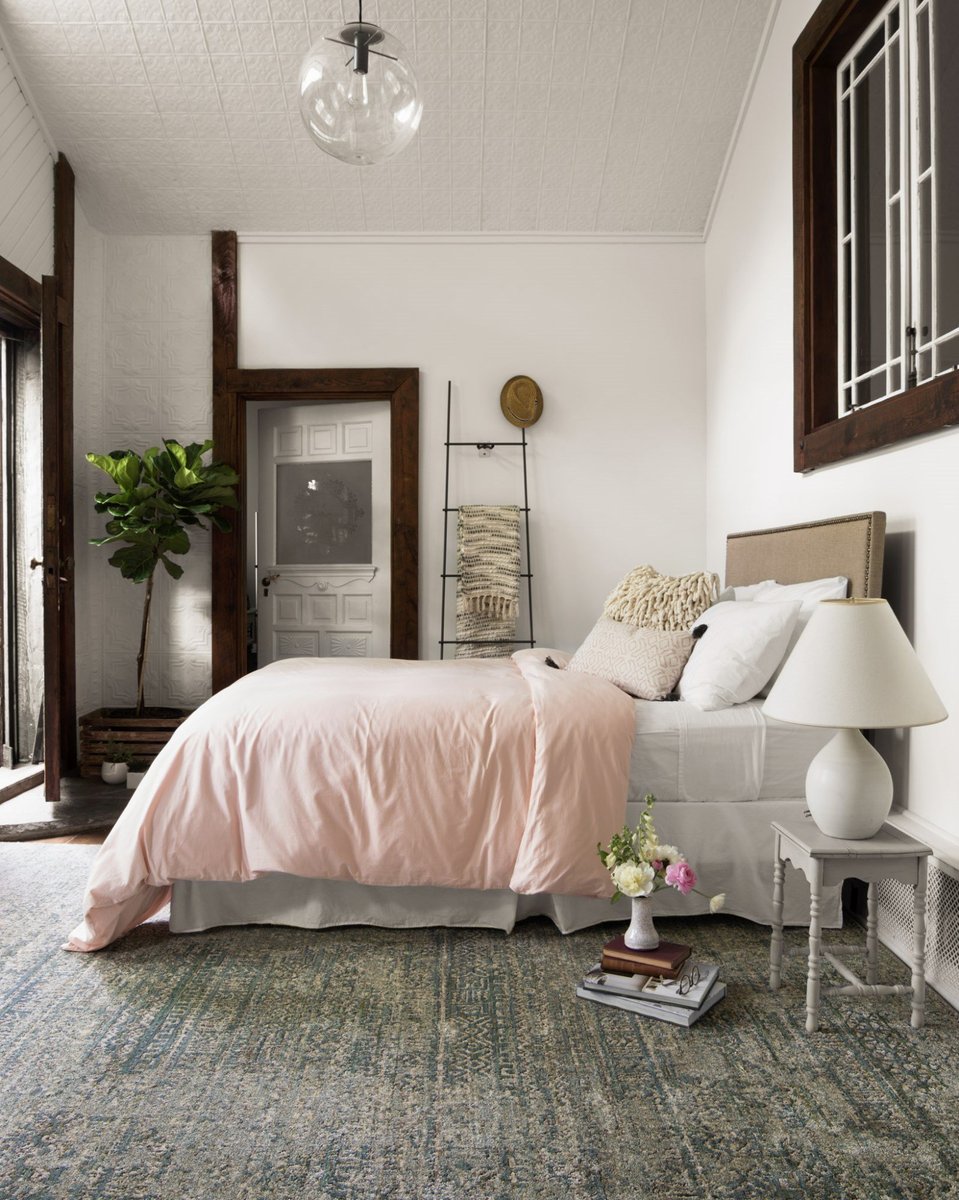
Placing a rug under a bed is about more than filling empty floor space. The right rug size and placement create comfort, visual balance, and a sense of intention in the bedroom. By choosing a rug that fits your bed, respects your room size, and aligns with how you move through the space, you create a bedroom that feels grounded and welcoming from the moment you step out of bed.
When in doubt, measure carefully, size up, and choose placement that supports how you actually use the room. A well-placed rug is one of the simplest ways to make a bedroom feel finished and thoughtfully designed.
Ideally, the rug should extend 18 to 24 inches beyond the sides and foot of the bed.
They can. Front legs on the rug usually create the most balanced look.
Yes. A rug can add definition and texture on top of carpet.
Yes, especially on hard floors. Rug pads prevent slipping and add cushioning.
Rectangular rugs are the most common and easiest to style under beds.
Rug pads are often an afterthought of the rug buying process, but they should be as carefully considered as the rug itself. These rug pads provide a plethora of benefits in terms of the rug’s comfort, longevity, and safety, so there are countless reasons to add one to any room of the home.



It’s as easy as adding the Protection Plan - along with the product you want covered - to your cart and checking out!
Once you purchase coverage, you will receive a welcome email, giving you access to your dedicated portal (where you will be able to view your coverage information and file a claim).
Accidental damage coverage begins day 1 of purchase, while defects in materials and workmanship are covered as soon as the 30-day return period expires.
You can file a claim by going to getmulberry.com/login and by logging into your portal. Or you can simply contact the customer support team 24/7 via [email protected].
If damage is beyond repair, Mulberry will replace your product or will reimburse you for your product. If a repair is needed, Mulberry will coordinate technician cleaning or repair. Mulberry will repair your product up to its original retail price.
You are able to cancel your Protection Plan by contacting Mulberry or by logging into your customer portal. Within the first 30 days of purchase, you will receive a full refund.
You can exchange your product for an identical product, without it affecting your warranty purchase. If you exchange your product for a different item, you will need to cancel your existing coverage and purchase a new plan, as coverage is tied to the specific product with which it was purchased.
Currently, coverage is only available in the United States, including Hawaii, Alaska and Puerto Rico.
The Protection Plan does not cover damage that occurs during product delivery, pet damage (other than bodily fluids), odor elimination, intentional abuse of the product, or theft or loss of the product.
Yes. All protection plans are transferable in ownership.


Mulberry is a best-in-class extended warranty provider that works with retailers to provide customers with accidental damage protection on their purchased products.
The Mulberry Protection Plan is a 1- and 5-year extended coverage program that protects against accidental damage to your rug.
Mulberry provides a quick, online claims process and does not require a receipt to file a claim.
Free standard shipping on all orders within the contiguous USA.
Orders to Canada, Alaska, Hawaii and Puerto Rico will incur additional shipping and handling fees, which will be calculated and presented at checkout. Canadian customers will be charged for all applicable customs duties, taxes, and brokerage fees.
For large, oversize rugs that require a surcharge above our shipping and freight partners’ standard shipping rates, an Oversize Processing Fee will be calculated in cart.
Your discount code is on its way.
If you don't receive your promo code, please check your email junk or spam folder and click on "Not spam".